Virtual File System (VFS) Layer
 VFS Layer - Customs House
Overview
The VFS layer provides a uniform interface to multiple file system types. It allows the kernel to support different file systems simultaneously through a common set of operations. Each mounted file system has a vfs structure containing function pointers for filesystem-specific operations.
VFS Structure
The vfs structure (vfs.h:46) represents a mounted file system:
typedef struct vfs {
    struct vfs *vfs_next;           /* next VFS in VFS list */
    struct vfsops *vfs_op;          /* operations on VFS */
    struct vnode *vfs_vnodecovered; /* vnode mounted on */
    u_long vfs_flag;                /* flags */
    u_long vfs_bsize;               /* native block size */
    int vfs_fstype;                 /* file system type index */
    fsid_t vfs_fsid;                /* file system id */
    caddr_t vfs_data;               /* private data */
    dev_t vfs_dev;                  /* device of mounted VFS */
    u_long vfs_bcount;              /* I/O count (accounting) */
    u_short vfs_nsubmounts;         /* immediate sub-mount count */
} vfs_t;
The vfs_next field links all mounted file systems into a global list headed by rootvfs. The vfs_vnodecovered points to the mount point vnode. The vfs_data field holds filesystem-specific private data.
VFS Operations Vector
The vfsops structure (vfs.h:87) defines file system operations:
typedef struct vfsops {
    int (*vfs_mount)();        /* mount file system */
    int (*vfs_unmount)();      /* unmount file system */
    int (*vfs_root)();         /* get root vnode */
    int (*vfs_statvfs)();      /* get file system statistics */
    int (*vfs_sync)();         /* flush fs buffers */
    int (*vfs_vget)();         /* get vnode from fid */
    int (*vfs_mountroot)();    /* mount the root filesystem */
    int (*vfs_swapvp)();       /* return vnode for swap */
    int (*vfs_filler[8])();    /* for future expansion */
} vfsops_t;
Each operation is invoked through macros like VFS_MOUNT(vfsp, mvp, uap, cr) which indirect through the vfs_op pointer. This allows different file system types to provide custom implementations.
File System Type Switch
The vfssw structure (vfs.h:116) maps file system names to operations:
typedef struct vfssw {
    char *vsw_name;             /* type name string */
    int (*vsw_init)();          /* init routine */
    struct vfsops *vsw_vfsops;  /* filesystem operations vector */
    long vsw_flag;              /* flags */
} vfssw_t;
The global vfssw[] array contains entries for each configured file system type (UFS, S5FS, NFS, etc.). The vfs_getvfssw() function looks up entries by name.
Mount Operation
The mount() system call (vfs.c:78) attaches a file system to the directory tree:
int
mount(uap, rvp)
    register struct mounta *uap;
    rval_t *rvp;
{
    vnode_t *vp = NULL;
    register struct vfs *vfsp;
    struct vfssw *vswp;
    struct vfsops *vfsops;
    register int error;

    /* Resolve mount point */
    if (error = lookupname(uap->dir, UIO_USERSPACE, FOLLOW, NULLVPP, &vp))
        return error;
    if (vp->v_vfsmountedhere != NULL) {
        VN_RELE(vp);
        return EBUSY;
    }
    if (vp->v_flag & VNOMOUNT) {
        VN_RELE(vp);
        return EINVAL;
    }
The function looks up the mount point vnode, verifies nothing is already mounted there, then locates the appropriate vfsops based on the file system type name or number.
VFS Flags
VFS flags (vfs.h:63) control mount behavior:
#define VFS_RDONLY    0x01    /* read-only vfs */
#define VFS_MLOCK     0x02    /* lock vfs so subtree is stable */
#define VFS_MWAIT     0x04    /* someone is waiting for lock */
#define VFS_NOSUID    0x08    /* setuid disallowed */
#define VFS_REMOUNT   0x10    /* modify mount options only */
#define VFS_NOTRUNC   0x20    /* does not truncate long file names */
#define VFS_UNLINKABLE 0x40   /* unlink can be applied to root */
These flags affect operations like permission checking, name handling, and locking behavior for the mounted file system.
VFS List Management
The vfs_add() function links a new vfs into the global list, while vfs_remove() unlinks it during unmount. The vfs_lock() and vfs_unlock() functions provide locking to stabilize the VFS tree during operations that traverse mount points.
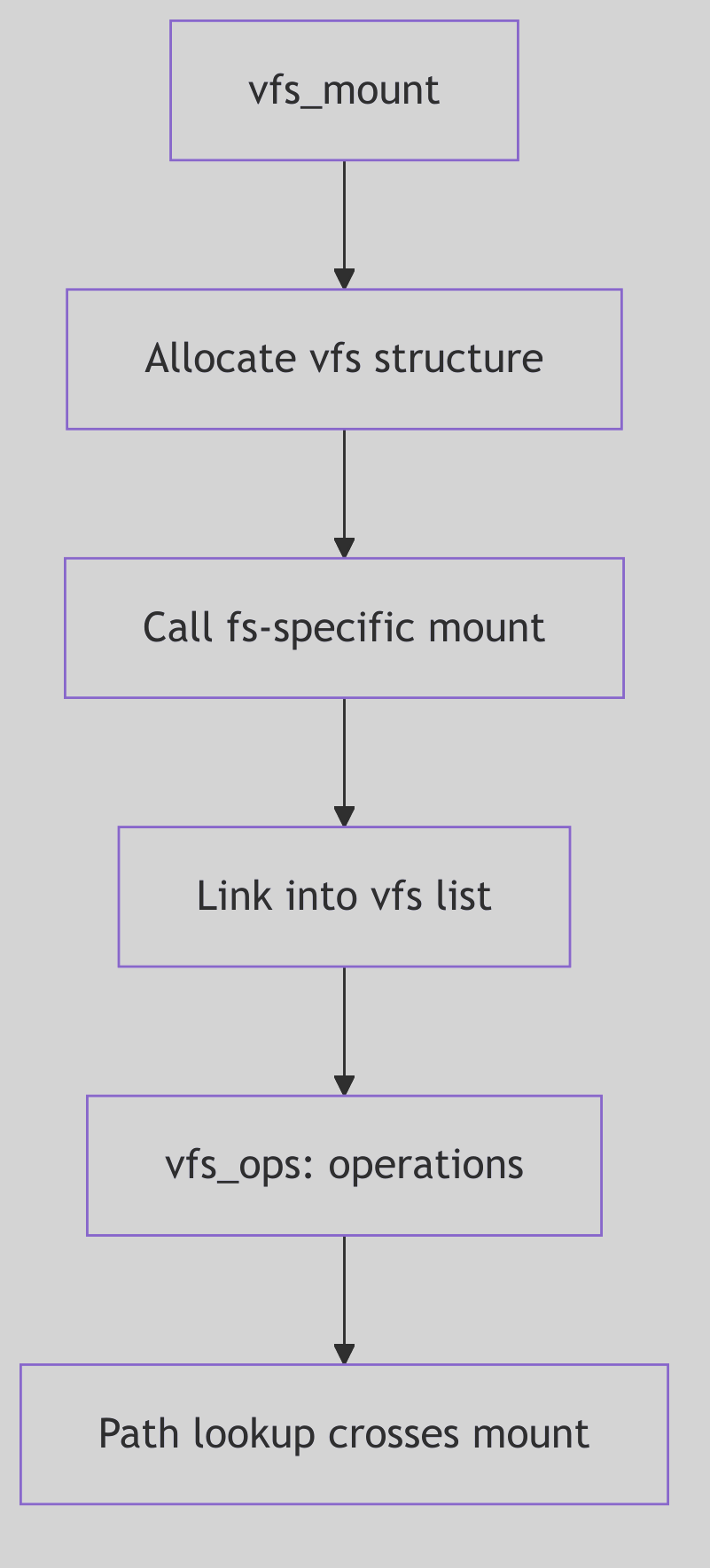 Figure 3.0.1: VFS List and Mount Structure